Seymour apologises to rubbish collectors, says he had no idea they were real people
The associate minister says he has never met anyone who collects rubbish, and wonders whether Copilot could do the job more cheaply.
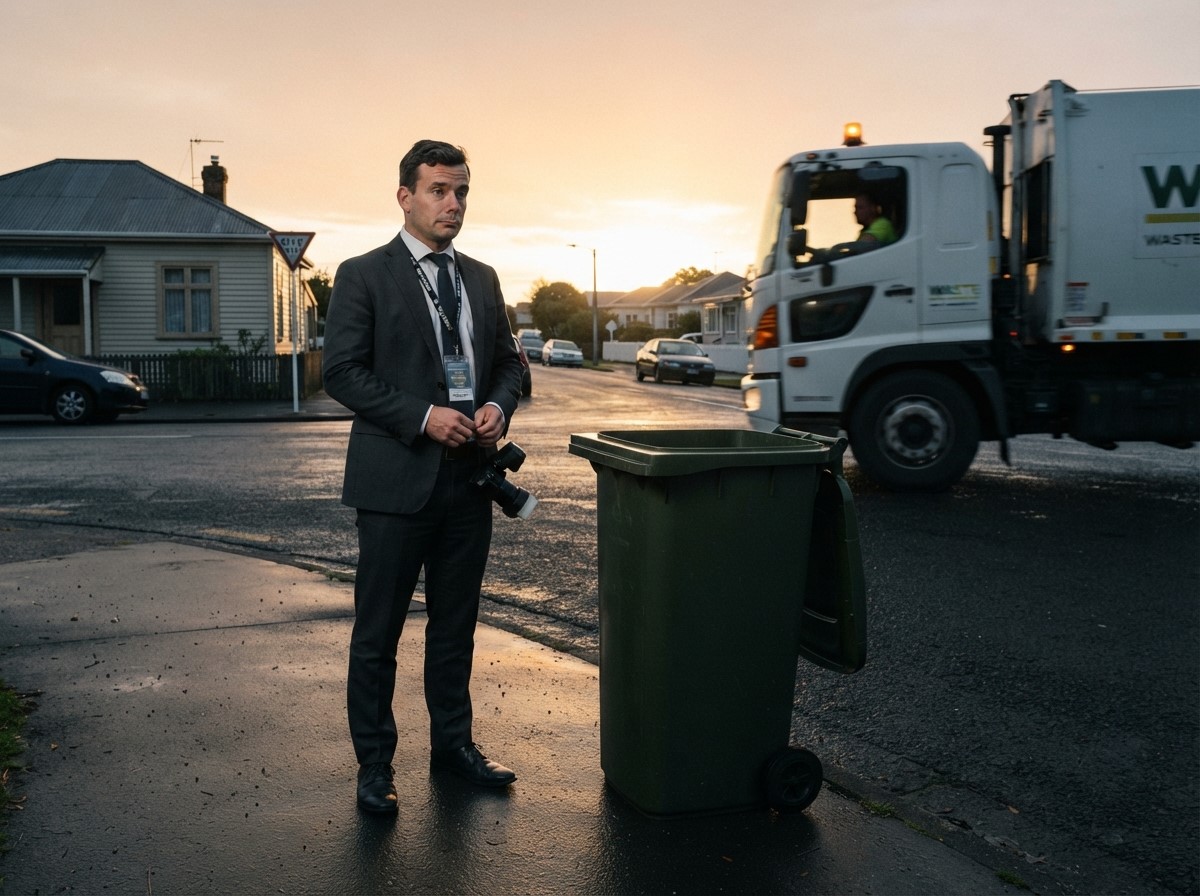
WELLINGTON – Associate Minister David Seymour has apologised to rubbish collectors for his earlier comments about wagging students, saying he “had no idea real, actual people collected rubbish.”
“I want to say sorry,” Seymour told reporters. “I had always assumed the rubbish simply left. Every Tuesday night I put the bin out, and every Wednesday morning it’s empty. I thought that was just how bins worked. It had never occurred to me that there was a person involved, let alone a whole sector.”
“I had always assumed the rubbish simply left.”
Seymour said he had never met anyone who collected rubbish. “I’ve met people who have seen the truck,” he said. “I once met a man who waved at it. But I’ve never actually spoken to someone who does it.”
He said he had not really thought about how his rubbish got collected. “I now know it involves a truck, early mornings and, I’m told, a lot of lifting,” he said. “That is far more than I had imagined, and I had imagined it very little.”
Seymour called the earlier remarks “a failure of imagination”, adding that this was not a failure historically associated with him.
Having learned more about the sector, Seymour said he had wondered whether Copilot could replace the collectors’ jobs and save their employer some money. “I’m not saying it should,” he said. “I’m saying it’s an efficiency question.”
He said he had raised the idea with Prime Minister Copilot, who called it “a fantastic and genuinely forward-thinking idea” and offered to summarise the city’s bins in a table.
Asked how Copilot would physically lift the bins, Seymour said that was “a detail for the implementation phase.”
A waste industry spokesperson said collectors accepted the apology, and invited the minister to join a truck for a morning “so he can meet one.” Seymour said he would check his diary, which was, historically, wide open.